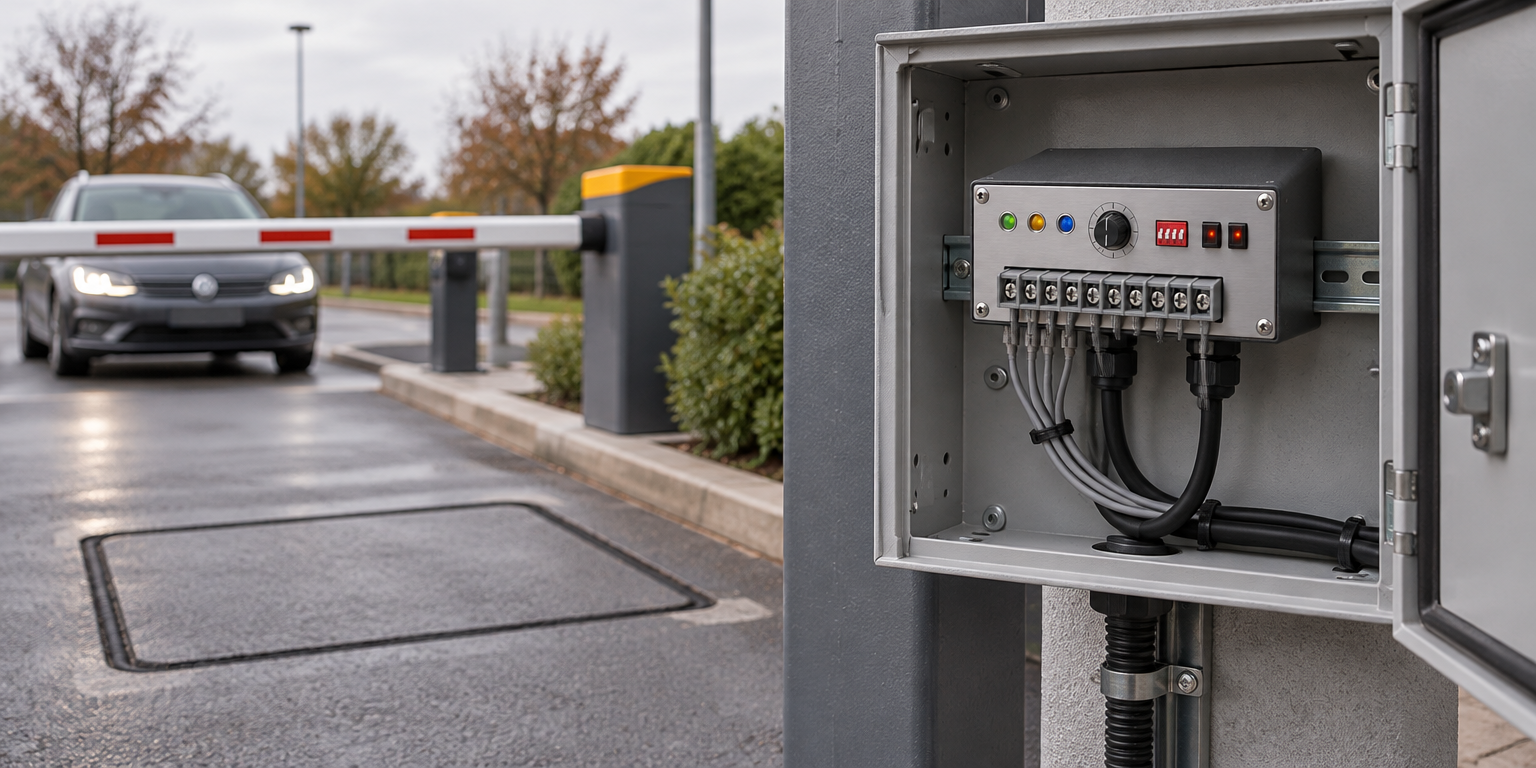
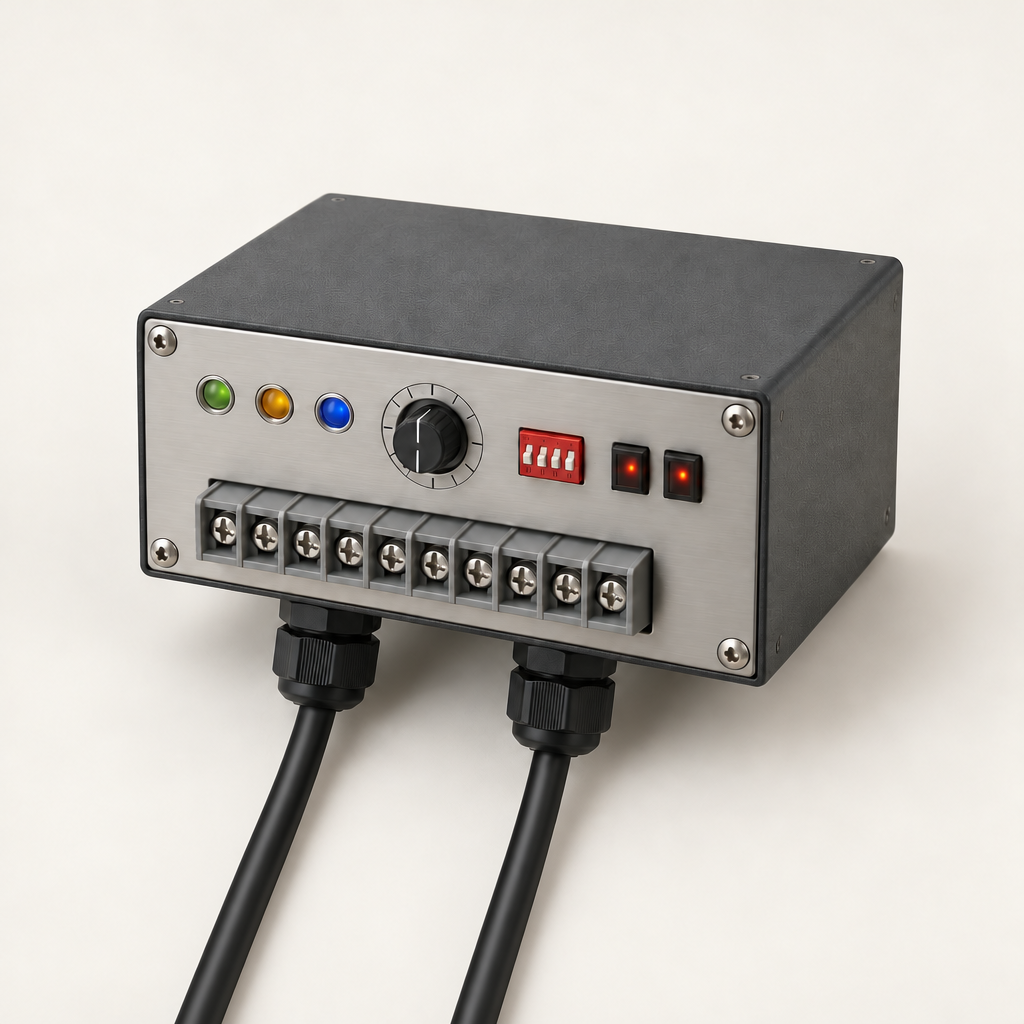
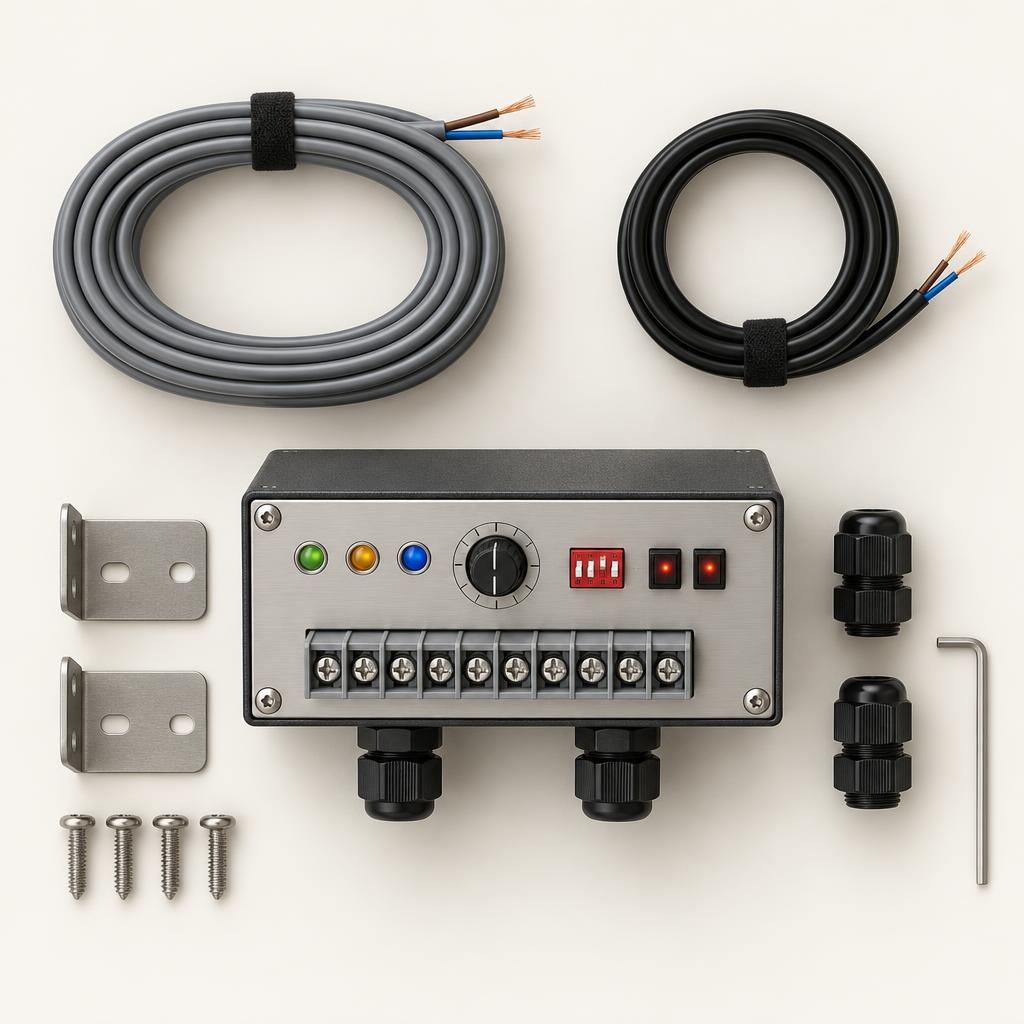
An inductive loop detector has two parts: a loop of insulated wire laid in a slot cut into the road surface, and an electronic unit that monitors that loop. It is one of the most common ways to detect vehicles at parking entries and exits, toll lanes and gated premises.
The unit sends a current through the loop, which creates a small magnetic field. When a vehicle stops on or drives over the loop, its metal body changes the loop’s inductance. The unit picks up that change and switches an output relay, which signals the barrier controller or the parking system.
In a typical lane, one loop sits just before the barrier and opens it when a vehicle arrives. Another sits under the barrier arm as a safety loop: while it detects a vehicle, the barrier will not come down. A third loop beyond the barrier can confirm the vehicle has passed, or count vehicles in and out.
Works in any weather: It senses metal, not light, so rain, dust, fog and darkness do not affect it.
Protects vehicles: The safety loop keeps the barrier up even when a vehicle is standing still beneath it.
Low maintenance: There are no moving parts. Once the loop is installed, it needs little more than occasional checks.
Adjustable: Sensitivity and presence time can be set on the detector unit to suit the lane and the vehicles that use it.
Steady counting: Because it reacts to the vehicle itself, it gives a reliable count of entries and exits for your parking software.
Easy to connect: The relay output works with boom barriers, gates and parking management systems.
Good to know: A loop responds to metal, so it will not detect pedestrians. Installation also means cutting into the road surface, which is easiest to plan during construction or resurfacing.